
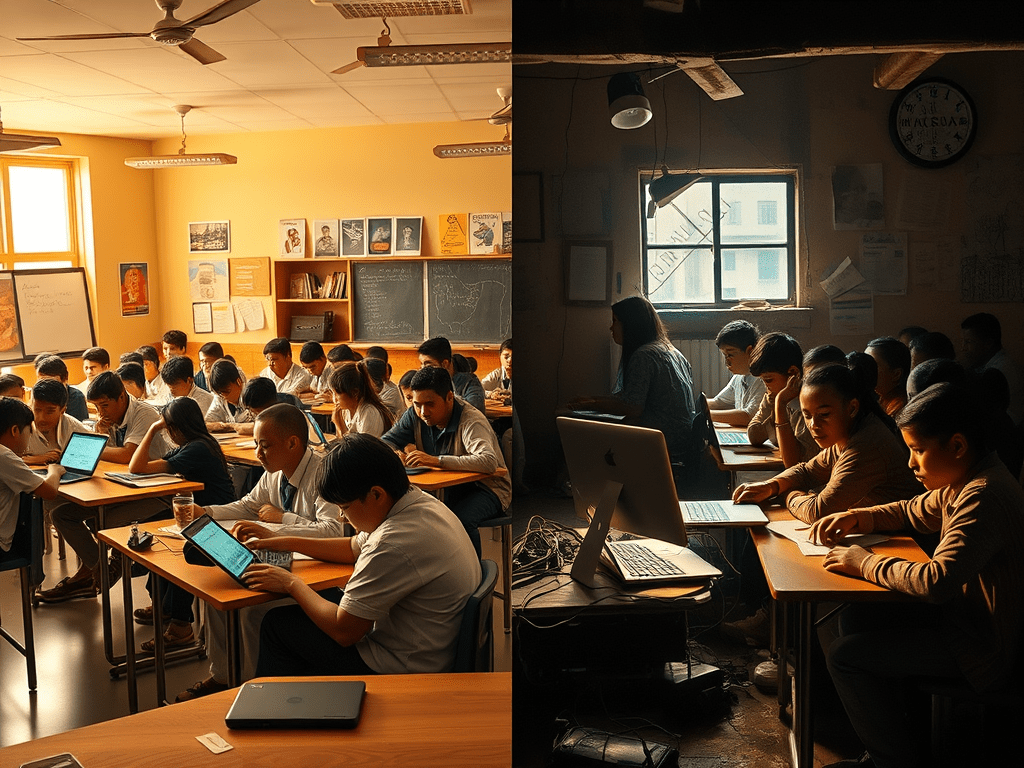
In the modern world, technology has become the backbone of economic growth, social progress, and individual opportunity. From education to employment, the digital landscape plays a crucial role in shaping the future of individuals and communities. However, not everyone has equal access to technology, creating what is known as the digital divide. This divide refers to the gap between those who have access to modern information and communication technology (ICT) and those who do not. This gap has profound implications for economic opportunity, as unequal access to technology directly impacts areas such as education, employment, and economic mobility. In this article, we will explore the economic ramifications of the digital divide and how it continues to shape the future of individuals and societies across the globe.
Understanding the Digital Divide
The digital divide manifests in various forms—rural versus urban, rich versus poor, and even across generations. In some regions, lack of infrastructure means that people do not have access to the internet or modern devices, such as smartphones or computers. In others, even if the infrastructure exists, digital literacy remains a challenge, preventing individuals from fully utilizing available technology. According to the International Telecommunication Union (ITU), more than half the world’s population remains offline, with many living in developing countries or rural areas.
The digital divide is not just about access to devices or the internet, but also about the ability to leverage technology for practical purposes—whether that be for accessing education, securing employment, or participating in the global economy. The gap between those who are digitally connected and those who are not is widening, and this gap is becoming an increasingly significant determinant of economic opportunity.
The Impact of the Digital Divide on Education
Education is one of the most crucial areas where the digital divide has a direct economic impact. Access to technology has become essential for quality education in the 21st century. Digital tools, such as online learning platforms, e-books, and educational software, have transformed how students learn and teachers teach. For students in disadvantaged areas, lack of access to these tools can limit educational outcomes and reduce future economic opportunities.
Online Learning and Educational Resources
During the COVID-19 pandemic, remote learning became the norm for millions of students worldwide. However, for many students, especially those from low-income families or rural areas, the shift to online learning was a challenge due to the lack of access to reliable internet or modern devices. According to a report from the World Bank, as many as 3.5 billion people live in areas with insufficient internet infrastructure. This lack of connectivity disproportionately affects low-income students and children in rural communities, creating a barrier to quality education.
Without access to digital devices and stable internet connections, students cannot access online classes, homework assignments, research materials, or collaboration platforms. This leads to a significant educational gap that can persist well into adulthood, limiting their ability to pursue higher education or gain marketable skills. As education is a primary driver of economic mobility, this creates a cycle of poverty that is difficult to break.
Bridging the Gap in Digital Literacy
In addition to physical access to technology, digital literacy is a critical factor in determining whether students can effectively use technology for educational purposes. In many low-income or rural areas, there is a lack of proper training to help individuals develop basic computer skills. As technology continues to evolve, the need for digital skills becomes increasingly important. Without access to digital literacy programs, students and adults alike may find themselves left behind in an increasingly technology-driven world.
The Digital Divide and Employment Opportunities
In the modern economy, digital skills are a prerequisite for many jobs. From remote work to the gig economy, technology-driven industries demand a workforce that is tech-savvy and adaptable. However, the digital divide limits access to these employment opportunities for those who lack the necessary tools or skills.
Job Search and Application
For job seekers, the internet is essential for researching job openings, submitting applications, and connecting with potential employers. Online job portals like LinkedIn, Indeed, and Glassdoor have become central to the hiring process, and many companies require candidates to apply through their websites. However, without access to the internet or devices, individuals cannot participate in the recruitment process, which limits their employment prospects.
This challenge is particularly acute for individuals living in rural or remote areas, where job opportunities are often scarce. In many cases, these individuals must rely on physical applications or word-of-mouth referrals, which significantly limits their ability to access broader job markets.
Remote Work and the Gig Economy
The COVID-19 pandemic accelerated the shift toward remote work, but the ability to work from home requires reliable internet and modern devices. For many people in disadvantaged communities, working remotely is not an option due to the lack of access to high-speed internet or appropriate technology.
Additionally, the rise of the gig economy, which includes freelance and contract work facilitated by digital platforms like Uber, Upwork, and TaskRabbit, has also highlighted the importance of technology in accessing employment. In regions where the digital divide is most pronounced, people are unable to participate in the gig economy, which is an increasingly important source of income for many.
Economic Mobility and the Digital Divide
The digital divide has long-lasting consequences for economic mobility, which is the ability of individuals or families to improve their economic status. Those without access to technology are at a significant disadvantage in improving their social and economic standing.
Wealth Gap and Inequality
The unequal distribution of technology exacerbates existing economic inequalities. Wealthier individuals and families are better positioned to invest in education and technology, which allows them to access higher-paying jobs and better opportunities for advancement. On the other hand, individuals from lower-income backgrounds, who lack access to technology and digital literacy training, face greater challenges in achieving upward mobility. This technological disparity often intersects with other forms of inequality, including race, ethnicity, and geographic location, further compounding the effects on economic opportunity.
According to a report by the Pew Research Center, individuals in lower-income households are significantly less likely to own a computer or have access to broadband internet, compared to their higher-income counterparts. This inequality limits their ability to participate in the modern economy and perpetuates cycles of poverty and economic stagnation.
Small Businesses and Entrepreneurship
Entrepreneurship has traditionally been seen as a pathway to economic mobility, especially in the digital age. However, small business owners in underserved communities face barriers to success due to the lack of access to technology. Digital tools are critical for marketing, sales, and managing operations in today’s business world. Without access to these tools, small businesses may struggle to compete with larger, tech-savvy companies.
In many low-income communities, aspiring entrepreneurs lack the resources to develop a digital presence, manage customer relationships, or even accept online payments. As a result, they are excluded from the digital economy and miss out on opportunities for growth.
Addressing the Digital Divide: Strategies for Bridging the Gap
To mitigate the economic impact of the digital divide, it is essential to invest in both technology infrastructure and digital literacy programs. Several strategies can help bridge the gap and ensure more equitable access to technology.
1. Expanding Internet Access
One of the most important steps in addressing the digital divide is expanding access to high-speed internet in underserved areas. Governments, nonprofit organizations, and private companies must collaborate to invest in broadband infrastructure, especially in rural and remote areas. Initiatives like Google Fiber and Starlink are examples of private sector efforts to bring internet connectivity to underserved regions.
2. Digital Literacy Programs
Beyond providing access to technology, individuals must also be equipped with the skills needed to use technology effectively. Digital literacy programs can help individuals of all ages learn how to use computers, navigate the internet, and develop essential digital skills. Schools, community centers, and libraries can offer training programs to help close the skills gap.
3. Affordable Technology
Ensuring that technology is affordable and accessible is another critical step. Subsidizing the cost of digital devices or offering low-cost internet plans can help reduce the financial barriers to accessing technology. Some initiatives, like TechSoup and PCs for People, focus on providing affordable technology to low-income families and communities.
Conclusion
The digital divide has profound economic implications. Unequal access to technology limits opportunities for education, employment, and economic mobility, reinforcing existing inequalities and making it harder for disadvantaged individuals to improve their economic standing. As the world becomes increasingly reliant on technology, addressing the digital divide is crucial for ensuring that everyone has an equal opportunity to thrive in the modern economy. By expanding access to technology, improving digital literacy, and making technology more affordable, we can begin to bridge this gap and create a more equitable economic future for all.
References
- World Bank. (2020). “The World Bank’s Response to the COVID-19 Crisis: A Digital Future for Education.” https://www.worldbank.org/en/news/feature/2020/04/15/a-digital-future-for-education
- Pew Research Center. (2021). “Digital Divide.” https://www.pewresearch.org/fact-tank/2021/04/30/
- International Telecommunication Union (ITU). (2021). “Bridging the Digital Divide.” https://www.itu.int/en/ITU-D/



 alind
alind 
Leave a comment