
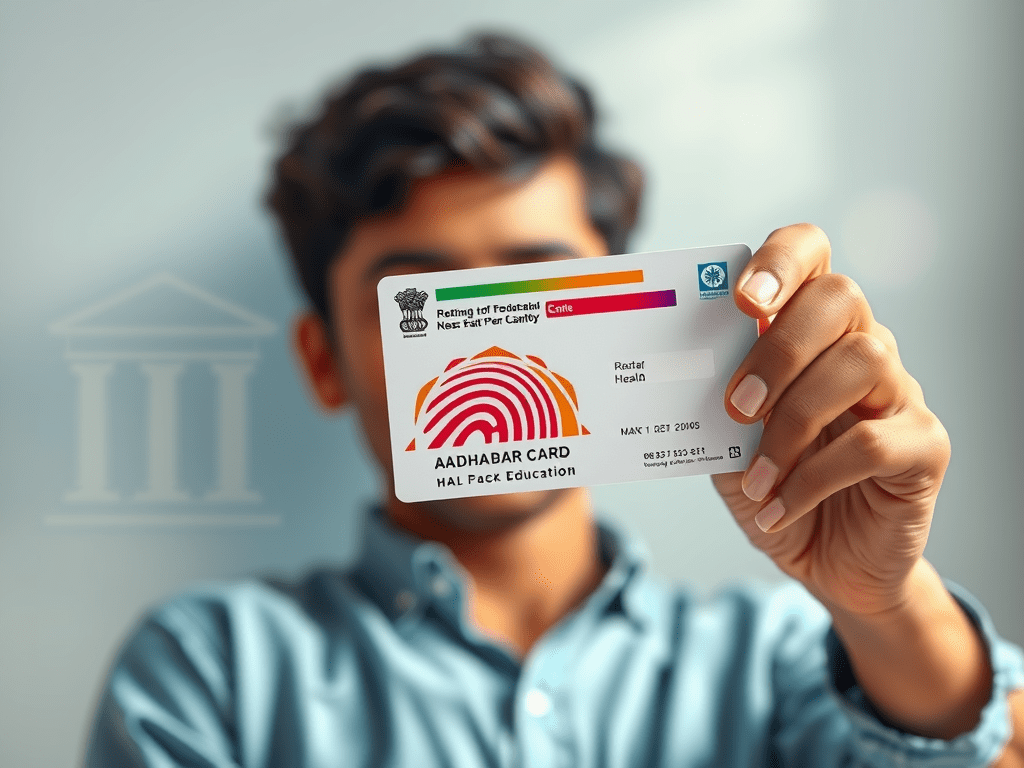
In today’s increasingly digital world, access to essential services such as banking, healthcare, and education is often limited by one critical factor: the availability of a verified identity. Many individuals, particularly in emerging markets, struggle to access basic financial services, healthcare, and education due to the lack of a secure and recognized form of identification. Without an official identity, millions are excluded from participating fully in the economy and society.
However, digital identity solutions, such as blockchain-based IDs, are emerging as a powerful tool to address this problem. By providing a secure, verifiable, and accessible way for individuals to prove their identity, digital identity systems are helping to empower individuals, especially in low-income and underserved regions, and open doors to financial services, healthcare, and education. In this article, we explore how these solutions are unlocking economic opportunities and driving financial inclusion across the globe.
What is Digital Identity?
Digital identity refers to the online representation of an individual’s identity. It is typically verified through digital means, using technologies such as blockchain, biometrics (fingerprints, facial recognition), and secure authentication systems. Unlike traditional forms of identification like passports or national ID cards, digital identities can be accessed and managed online, offering more flexibility, security, and control to individuals.
In many developing countries, a formal identity—such as a government-issued ID—is a prerequisite for accessing essential services, including banking, voting, and healthcare. However, billions of people worldwide lack a formal identity, preventing them from accessing these crucial services. According to the World Bank, approximately 1 billion people globally are “invisible,” without a recognized legal identity.
Digital identity solutions seek to solve this problem by providing a secure, verified digital ID that individuals can use to access financial services, vote, register for healthcare, and gain educational opportunities, thus addressing a major barrier to financial inclusion.
How Digital Identity Drives Financial Inclusion
Financial inclusion refers to the ability of individuals to access and use affordable and appropriate financial products and services, such as bank accounts, credit, insurance, and digital payments. According to the World Bank, more than 1.7 billion adults worldwide remain unbanked, many of whom live in emerging markets. One of the primary barriers to accessing these services is the lack of an official identity.
Digital identity systems, especially those built on blockchain technology, can address this issue in several ways:
1. Secure and Accessible Identification
In many parts of the world, especially in rural areas, individuals lack the documentation required to open a bank account or access credit. A blockchain-based digital identity allows individuals to have a secure, verifiable, and easily accessible identity without the need for physical documents. Blockchain technology, with its decentralized nature, ensures that these identities are tamper-proof, providing both individuals and financial institutions with a high level of confidence in the validity of the information.
For example, initiatives such as Estonia’s e-Residency and India’s Aadhaar program are early examples of how digital identity solutions can drive financial inclusion. Aadhaar, a biometric-based identity system in India, has been used to provide banking services, government benefits, and access to social security for millions of previously excluded individuals.
2. Simplifying KYC (Know Your Customer) Processes
One of the biggest barriers to accessing financial services, particularly in developing countries, is the complexity and cost of Know Your Customer (KYC) compliance. Financial institutions require individuals to prove their identity to comply with regulations and prevent fraud. However, traditional KYC processes can be expensive, time-consuming, and inaccessible for individuals without official documentation.
Digital identity solutions make the KYC process much more efficient by providing a verified and trusted identity that can be used by banks, credit institutions, and fintech companies. Through biometric data, blockchain technology, and secure digital signatures, financial institutions can easily authenticate customers, thus reducing the barriers to account opening, credit access, and digital payments.
3. Enabling Access to Credit and Loans
In many countries, individuals with limited access to traditional banking services face difficulty obtaining credit due to the absence of a credit history or official identification. Digital identity systems can help solve this problem by enabling the creation of a digital credit score based on verified information, such as transaction history and online behavior.
Blockchain-based credit scoring platforms, such as Celo or Trust Wallet, allow individuals in emerging markets to build a credit history through their mobile devices, even if they have never had a bank account or credit card. This, in turn, opens doors to microloans, small business financing, and other financial products.
4. Digital Payments and Mobile Banking
Digital identity also plays a key role in enabling mobile banking and digital payment systems. For people in regions with limited access to physical banking infrastructure, mobile phones are often the only means of accessing financial services. Through digital IDs, individuals can securely access their mobile wallets, transfer funds, and make payments without the need for a bank branch visit.
In Africa, for example, mobile banking platforms like M-Pesa are empowering millions of people to send and receive money, pay bills, and even access loans. By linking digital identities with mobile banking platforms, individuals can authenticate themselves and securely engage in financial transactions.
How Digital Identity Unlocks Access to Healthcare
Access to healthcare is another critical area where digital identity systems are making a profound impact. In many developing countries, the lack of an official identity prevents people from accessing healthcare services, particularly in rural or remote areas. Without a digital identity, individuals are unable to prove their eligibility for government-provided healthcare services, insurance, or vaccinations.
1. Health Insurance Access
Digital identity systems enable individuals to prove their identity and register for health insurance or government-sponsored healthcare programs. Blockchain technology allows for secure health records that are accessible only to authorized parties, ensuring privacy and security. By linking health records with a verified digital identity, individuals can easily access healthcare services when needed.
2. Healthcare Records Management
Digital identity also facilitates the management of healthcare records. Blockchain-based solutions enable individuals to control their medical data and share it with healthcare providers when necessary. For example, blockchain-powered platforms such as Medicalchain and Healthereum offer individuals greater control over their health records and medical history, making it easier to access quality care.
How Digital Identity Facilitates Access to Education
Education is another key area where digital identity solutions are unlocking economic opportunities. Without an official identity, individuals in many regions cannot apply for educational loans, register for exams, or even receive certifications. A blockchain-based digital identity can serve as a secure and reliable method of proving one’s identity, which is essential for accessing educational opportunities.
1. Accessing Educational Loans
In many developing countries, students are unable to secure educational loans due to a lack of verifiable identification. By using digital identity systems, students can prove their eligibility and gain access to financing options for education.
2. Certificates and Degrees
Blockchain technology is increasingly being used to verify academic qualifications and certificates. Universities and educational institutions can issue digital diplomas and certificates that are linked to an individual’s blockchain-based identity, ensuring that degrees cannot be falsified and providing employers with reliable information.
The Future of Digital Identity and Financial Inclusion
The integration of digital identity systems into emerging markets is still in its early stages, but the potential is immense. As more countries adopt digital ID programs, millions of people will gain access to financial services, healthcare, and education. This will drive greater financial inclusion, economic growth, and social mobility.
Governments, financial institutions, and technology companies must work together to ensure that digital identity systems are secure, accessible, and inclusive. By ensuring the privacy of personal data and promoting interoperability across platforms, digital identity can play a transformative role in unlocking economic opportunities for individuals in emerging markets.
Conclusion
Digital identity solutions, particularly blockchain-based IDs, are revolutionizing the way individuals in emerging markets access financial services, healthcare, and education. By providing a secure and verifiable means of identification, these systems are breaking down barriers to inclusion, empowering individuals, and unlocking economic opportunities. As these solutions become more widespread, they hold the potential to transform economies and improve the lives of billions of people around the world.
References:
- World Bank. (2020). “Digital Identity and Financial Inclusion.” worldbank.org
- McKinsey & Company. (2021). “Blockchain for Financial Inclusion.” mckinsey.com
- Estonian e-Residency. (2023). “Digital Identity Solutions.” e-resident.gov.ee
- OECD. (2021). “Digital Identity and Economic Growth.” oecd.org
- Global Partnership for Financial Inclusion (GPFI). (2020). “Unlocking Financial Inclusion with Digital Identity.” gpfi.org


 alind
alind 
Leave a comment